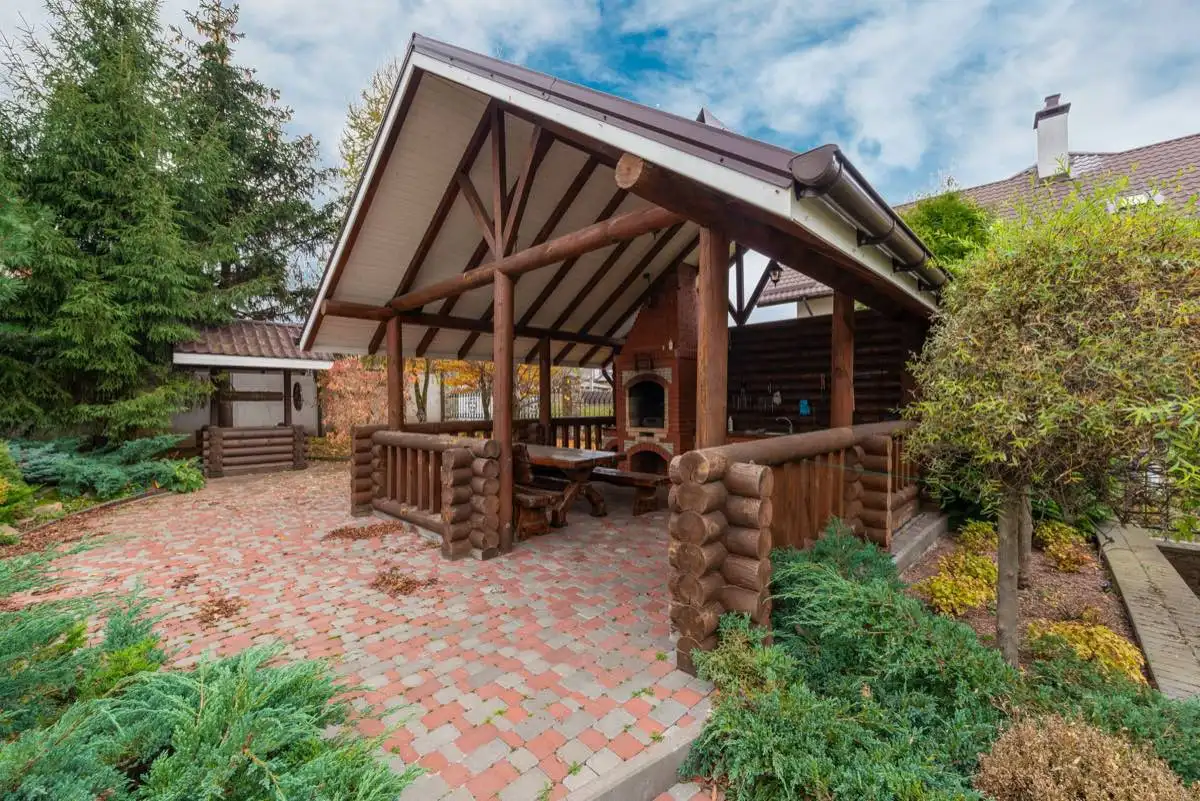
Patio enclosures come in three tiers — screen, three-season and four-season — and the budget roughly doubles at each step, so picking your tier honestly is the whole game. Screen keeps the bugs out. Three-season keeps the weather out. Four-season keeps the temperature out and becomes part of your house, with all the code that implies.
Most people arrive at this decision the same way: something ruined dinner. A mosquito, a gust, a sideways rain, or the specific insect that appears to exist solely to land in a glass of wine at the exact moment the food comes out. Whatever chased you inside is the thing that tells you which tier you need.
The three tiers, side by side
| Screen room | Three-season room | Four-season room | |
|---|---|---|---|
| Walls | Aluminum frame + mesh | Vinyl or acrylic panels | Insulated walls, real windows |
| Keeps out | Bugs, leaves, debris | Bugs, wind, most rain | All of it, plus temperature |
| Conditioned? | No | No | Yes, heated and cooled |
| Rough cost | ~$8–$25/sq ft | Mid-range, panel-dependent | Highest, roughly double a three-season |
| Permit weight | Usually light | Moderate | Structural plus energy code |
| Foundation | Existing slab often fine | Existing slab often fine | Usually needs a real foundation |
The line that matters is between three-season and four-season. Everything below it is an outdoor space with better manners. Everything above it is a home addition, and it gets priced, permitted and inspected like one. If a quote for a "sunroom" looks suspiciously cheap, find out which side of that line it's sitting on.
Screen enclosure ideas that actually change the space
Screen is the highest-return tier in this whole category, and it's the one people underspend on because mesh sounds like mesh. It isn't.
- 18x14 fiberglass is the standard. Cheap, forgiving, handles normal mosquitoes and flies.
- 20x20 no-see-um mesh has a tighter weave for midges, gnats and sand flies. It trims airflow and visibility slightly, and in a market with tiny biting insects it's the difference between using the room and staring at it.
- Pet-resistant polyester mesh is several times stronger than standard screen and exists because dogs do not believe in doors. You can mix meshes by height to save money — tough stuff on the bottom, standard above.
- Aluminum mesh resists tearing and dents instead, which is either a feature or a nuisance depending on your household.
The two upgrades nobody regrets: a kick plate along the bottom, a solid panel 12 to 24 inches up that absorbs the mower debris, the dog and the chair legs, and a proper hinged screen door with a closer instead of the flimsy one in the kit. Sliding screen doors on patios have a remarkable talent for leaving their track by year three.
Si prefieres que te expliquemos las opciones en español, con gusto lo hacemos.
Three-season rooms: the underrated middle
A three-season room swaps mesh for vinyl or acrylic panels that slide or stack, so you can run it wide open in mild weather and closed against wind and rain the rest of the year. Acrylic costs more than vinyl and stays clearer longer; vinyl is softer, cheaper, and hazes over time under hard UV.
The honest limitation: a three-season room without conditioning still gets hot. Single-layer panels are a wind barrier, not an insulation package. Pair one with an insulated foam-core roof and a ceiling fan and it performs far better than the same room under a bare aluminum pan, because the ceiling ends up doing the thermal work the walls can't.
Four-season rooms and the budget cliff
The moment the space is heated and cooled, it's conditioned living area. That triggers energy code compliance, insulated walls and roof, code-compliant windows, usually a real frost-depth foundation instead of the existing patio slab, and a structural plan review. Your HVAC has to be sized for it too — extending an existing system into a glass room is an efficient way to make two rooms uncomfortable instead of one.
None of that is a reason to avoid a four-season room. It's a reason to stop calling it "enclosing the patio," which is how people end up stunned by the second quote.
The structural part that gets skipped
An open patio cover lets wind blow straight through it. Enclose it and that same structure starts catching wind like a sail, which changes the uplift and lateral loads the posts and footings have to resist. That's why enclosing an existing cover should start with someone crawling around looking at footings rather than at fabric samples.
So there are three questions, in order: what is actually in the ground under those posts, what were the beams and anchors sized for, and how much of that margin do new walls eat. Pier sizing and the code sections behind it are in the pergola vs patio cover breakdown; the design wind speed that decides the answer is in the permits guide, along with why the number most people repeat is a code cycle out of date. Walls can push an older frame past anything it was designed for. Better to find that out on paper than in a storm.
There is a code line under all of this too, and it is sharper than people expect. The IRC's patio-cover appendix only keeps treating your structure as a patio cover while its walls stay mostly open; close them past a defined share of open area and you have crossed into permitting a room, with the wall, roof and energy provisions that come with one. The threshold is in the permits guide, and it is the same line your budget crosses.
When not to hire anyone
Two genuine do-it-yourself cases here.
A torn screen panel is not an enclosure project. New mesh, new spline and a $10 spline roller from any hardware store gets one panel done in about twenty minutes. If the frame is otherwise solid and a single panel took a football to the face, fix that panel and keep the rest of your money.
If the only thing driving you indoors is sun, you don't need an enclosure at all. You need a roof. A solid or insulated cover over the same slab costs less than screening plus a cover and solves the actual problem. Work through the patio cover ideas guide first and see whether shade alone fixes it.
The opinion, stated plainly
Screen the cover first, and live with it a full year before you spend on panels. Screening an existing covered slab runs roughly $8 to $25 a square foot — call it $2,000 to $6,000 on a 12x20 — and it solves the bug problem, which is the real complaint most of the time. Three-season and four-season work is additive, so you're not throwing the screen away by starting there. Jumping straight to a conditioned room because a showroom looked good is how people spend addition money on a space they use nine days a month.
One more sequencing note: ask the permit questions early. Review sits in a queue measured in weeks and occasionally in months, and HOA architectural review is a separate approval running on its own clock beside the city's. Our guide to patio cover permits walks through what usually triggers what.
Bottom line
Pick the tier by what's chasing you inside. Bugs mean screen. Wind and rain mean three-season. Wanting to sit out there in January means four-season, a real permit and a real foundation. Then check the footings before anyone adds walls to a structure that was designed without them.
San Angelo Elite Patio Covers builds patio enclosures, insulated covers and pergolas across San Angelo and the Concho Valley, permitted and engineered for local loads. We'll look at what you already have and tell you the smallest change that fixes the problem. Call (866) 927-1926.
Ready for a free quote in San Angelo?
San Angelo Elite Patio Covers — free estimate, clear scope, no pressure. Use the form on this page or jump to the homepage quote.
Related services in San Angelo
San Angelo Elite Patio Covers money pages — go straight to the service you need.
- Patio Enclosures →
An enclosure suits San Angelo when the goal is dust, wasps and wind rather than temperature. Walls around a patio change how air behaves on it, and that alone adds hours to the day.
- Insulated Patio Covers →
This is the structure we build most often in San Angelo, because a foam-core insulated roof does the one thing this climate genuinely demands. It stops radiant heat instead of collecting it and pushing it back down at you, and over a west-facing slab that difference decides whether the patio gets used in August.
- Screened Porches & Screen Rooms →
In the Concho Valley a screened porch is mostly a sun structure. Mesh keeps the wasps and the June bugs out, but what decides whether the room gets used is what it does about the west afternoon.
- Sunrooms & Glazed Enclosures →
A fully glazed room facing the West Texas sun is the easiest way to spend serious money on a space you then avoid half the year. It can be done well.
- Retractable & Motorized Screens →
Retractable screens earn their place here for two reasons, the west sun and the wind. Dropping a solar mesh at four in the afternoon and rolling it back up at seven is the closest thing to adjustable shade anyone sells, and on a patio that faces the wrong way it is the difference between using the space and looking at it through the kitchen window.
Frequently asked questions
What is the cheapest way to enclose a patio?
Screen. A screen enclosure on an existing slab under an existing cover commonly runs about $8 to $25 per square foot, because you're adding an aluminum frame and mesh rather than glass, insulation or a foundation. It stops bugs and blowing debris, and it does nothing at all for temperature.
What is the difference between a three-season and a four-season room?
A three-season room uses single-layer vinyl or acrylic panels and is not heated or cooled, so it extends your usable months without becoming part of the house. A four-season room is conditioned space, which means it triggers energy code, insulation requirements, a real foundation and a much bigger permit. That jump is where budgets roughly double.
Can you enclose an existing patio cover?
Often, but the structure has to be checked first. Adding walls changes how wind moves through the frame, so posts, beams and footings that were fine for an open cover may need reinforcing. An installer who quotes an enclosure without ever looking at the footings is quoting a guess.
What screen mesh should I use on a patio enclosure?
Standard 18x14 fiberglass mesh is the default and handles ordinary insects. Step up to 20x20 no-see-um mesh if you get midges or sand flies, and to a pet-resistant polyester mesh if you have a dog or cat that treats screens as a suggestion. Aluminum mesh costs more and tends to dent rather than tear.
Do you need a permit to enclose a patio?
Almost always, and the permit gets more serious as the enclosure gets more permanent. Screening in an existing covered patio is commonly a straightforward permit; converting to conditioned four-season space brings energy code, structural review and often a longer plan review. Confirm the requirements with your local building department before you order anything.
How much does a screened-in patio cost?
Commonly $8 to $25 per square foot if the cover and slab are already there, so a 12x20 lands roughly $2,000 to $6,000. Building the cover and the enclosure together costs more overall but is usually cheaper than doing them a year apart, because the crew only mobilizes once.
Does a patio enclosure add value to your home?
A permitted, well-built enclosure generally helps, and an unpermitted one can actively hurt you at closing when an inspector finds enclosed square footage that isn't on the record. Four-season rooms may count toward livable area if they meet code; screen rooms typically do not.
Local context
How this applies in San Angelo, TX
Every article here is written from patio cover work done in San Angelo and the Concho Valley, so the numbers reflect local labour, permit and material costs rather than a national average. Your own job can land either side of them depending on access, the condition of what is already there, and the materials you pick — insulated foam-core roof panels, 26-gauge R-panel steel roofing, powder-coated extruded aluminum framing.
The way to turn any of this into a real answer is to have someone look at your actual situation. The free estimate is free, itemized and written down, with no deposit and no obligation. Call (866) 927-1926 or start on the San Angelo Elite Patio Covers homepage.
Areas San Angelo Elite Patio Covers covers
San Angelo first, then the surrounding communities of the Concho Valley. Each has its own page with local detail rather than a copy of this one:
- Grape Creek, TX — Tom Green County, a census-designated place, population 3,594 at the 2020 census
- Wall, TX — Tom Green County, an unincorporated community, population a small farming community with its own school district
- Christoval, TX — Tom Green County, a census-designated place, population 482 at the 2020 census
- Miles, TX — Runnels County, a small incorporated city, population 875 at the 2020 census
- Veribest, TX — Tom Green County, an unincorporated community, population a rural community served by its own school district
- Carlsbad, TX — Tom Green County, an unincorporated community and census-designated place, population 622 at the 2020 census
Or jump to the full list of San Angelo services.
More from the San Angelo Elite Patio Covers blog
- Patio Cover Ideas That Actually Get Used (San Angelo)
Patio cover ideas ranked by how you'll use the space — solid roof, pergola or shade sail — plus wood vs aluminum vs vinyl and real San Angelo, TX costs.
- Average Patio Cover Cost in San Angelo: Honest Breakdown
Most patio covers run $15 to $40 per square foot installed. Here's the real cost by material and size in San Angelo, TX, plus where the quote balloons.
- Insulated Patio Cover Cost Per Sq Ft in San Angelo
Insulated foam-core patio covers run about $30 to $60 per square foot installed in San Angelo, TX. Here's what R-value and core thickness really buy.
The San Angelo Elite Patio Covers Team
patio cover specialists serving San Angelo, TX
Written by the San Angelo Elite Patio Covers team — insured patio cover pros with 15+ years serving San Angelo, TX and the surrounding area.